
By Yanagi and Yoh Hihara. Released in Japan as “Mori no Hashikko no Chibi Majo-san” by TO Books. Released in North America by J-Novel Club. Translated by Nathan Macklem.
There’s a famous early episode of M*A*S*H where Hawkeye tries to save a patient but fails, and is despondent about it. Henry Blake, in a rare serious turn, says that the first thing he learned in the war was two rules. Rule #1: Young men die. Rule #2: Doctors can’t change Rule #1. This third volume of Tiny Witch is very much about teaching Misha that lesson, as she goes through all the worst things a doctor – sorry, apothecary – can go through. There’s a pandemic that she finds near impossible to solve, people blame her for it and even attack her at one point, and even once she helps to find an answer, some people still die from it and her relationship with the survivors will never be the same. Being an apothecary is not just handing out magic medicine that makes everyone better. Sometimes people die. Misha does learn this lesson, but there are a lot of tears and breakdowns afoot here.
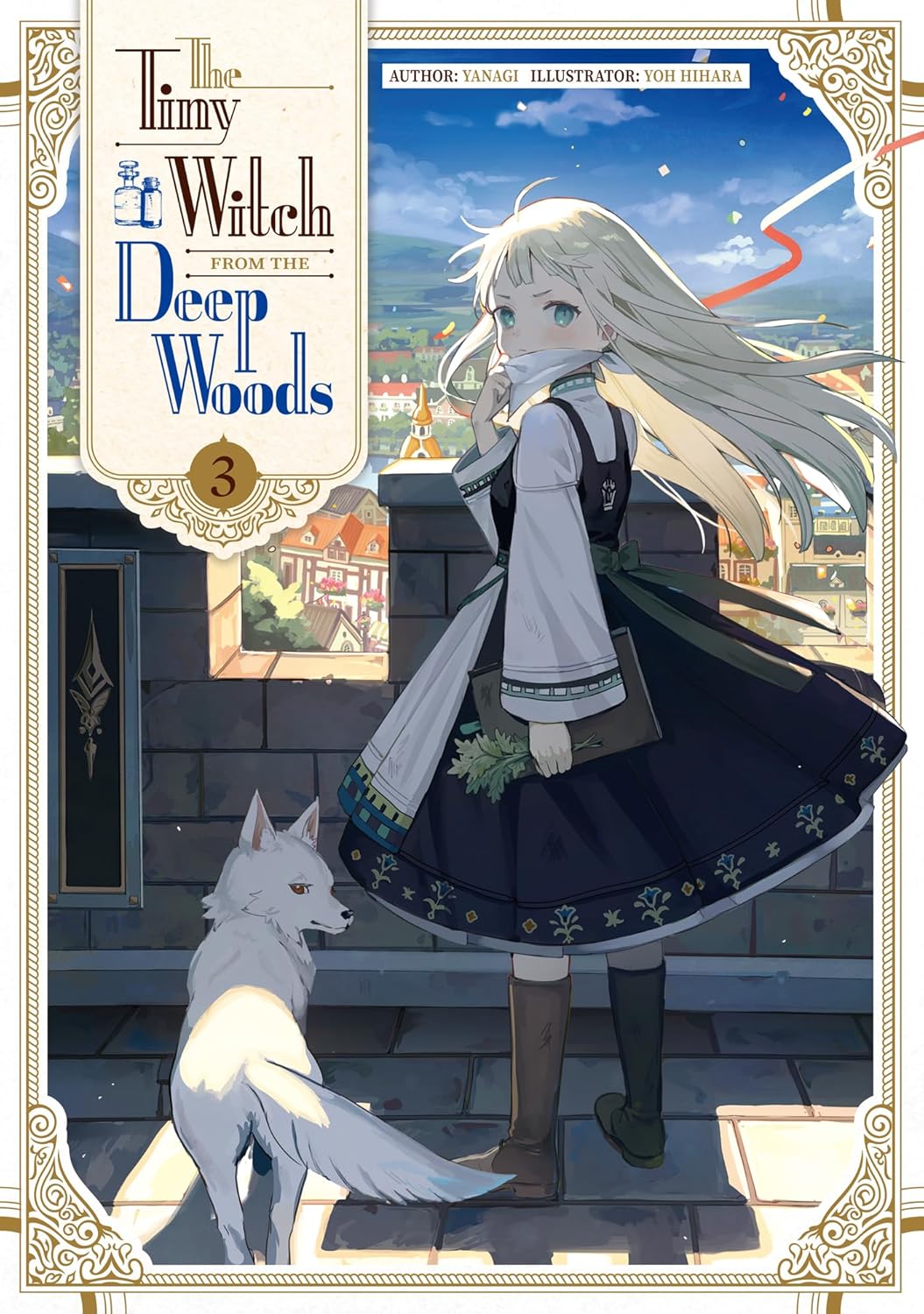
Misha is having a lot of fun at the Kingdom of Redford. She’s helped the princess regain some of her health, she’s made friends with the local children, and she even gets to walk around a town festival. Unfortunately, then those same kids come to tell her that one of them is sick. Along with her grandmother. And the sickness turns out to be very familiar – it’s the plague that almost destroyed the kingdom a generation ago. Now she has to try to solve what others couldn’t before, and without any other help… or so she thinks, but fortunately, some allies arrive to remind her that while the elves (cough) sorry, People of the Forest are loners who tend not to get involved in other people’s business, they will actually help her if she needs help. Even more fortunately, friends she made along the way in the first book turn out to be more valuable than she thought.
This is very much both a “Misha grows up” volume and also a reminder that Misha is not grown up yet, and also has had a lot of trauma in the past. As it turns out, and I’m sure this won’t become relevant in a later book, the woman who set up the death of Misha’s mother, who was confined to an asylum, has escaped. Her friend tries to ask if it’s OK to tell her the information, but the mere reminder of the incident sends Misha into a panic attack. Because she’s good at remaining outwardly nice and friendly, it’s hard to tell sometimes how she’s barely holding it together, and the plague absolutely does not help. By the end of the book, she’s the definition of sadder but wiser, especially with the children she made friends with, who now see her and can’t help but think “she promised to save my granny but did not”. Misha, think of those you did save as well.
The end of this book suggests that we will spend the next several books stuck in the People of the Forest’s closed-off village, and I am 100% sure that’s not going to happen, so it will be interesting to see how that gets derailed. Till then, this is a very solid fantasy.




0 Comments